
An API (application programming interface) is a set of rules that lets two pieces of software exchange data or commands automatically, without a human in the middle.
The short version
An API (application programming interface) is a set of rules that lets two pieces of software talk to each other — no human required.
When your accounting app automatically pulls yesterday’s card charges from Stripe, that is an API at work. When your CRM creates a contact the moment someone fills out your Typeform, that is an API. When Zapier triggers a Slack alert on a new Shopify order, that is APIs stitched together.
A SaaS API, visualized
You never see the API yourself. You see the result: a new HubSpot contact appears with the Typeform data already filled in.
Why small teams should care about APIs
You are probably thinking “I’m not a developer, why does this matter?” — fair. But three things touch your life directly:
- Integrations work (or they don’t) because of APIs. A tool with a strong API is a tool that connects to every other tool. A tool with a weak API is an island.
- Automation tools need APIs. Zapier, Make and n8n are just friendly wrappers around APIs. If your CRM has a bad API, Zapier can only do trivial things with it.
- Leaving a tool depends on its API. The API is how you export data out when you migrate. Weak export = painful migration.
The three kinds of APIs you will hear about
You do not need the technical detail — but you will see these words in vendor marketing.
The most common style. Apps ask questions (“give me this contact”) or send actions (“create this deal”) via simple web URLs.
The reverse. Instead of asking, App B sends a message to App A the instant something happens. Faster, less polling.
A newer style. Apps ask for exactly the data they need in one request. Mostly relevant if you have engineers.
How APIs show up in everyday SaaS
If you use SaaS, you already use APIs — you just did not name them. Examples:
- Stripe → QuickBooks: card charges sync as accounting entries.
- Slack → Trello: mentioning a card in Slack creates a preview.
- Gmail → HubSpot: emails log against the contact automatically.
- Shopify → Klaviyo: new customers land in email lists.
- Calendly → Zoom: scheduled meetings auto-create Zoom links.
Each of those connections is two APIs talking.
Tools with genuinely great APIs
Some SaaS tools are famously API-friendly. Others are famously not. If integration matters to you, prefer these when you shortlist.
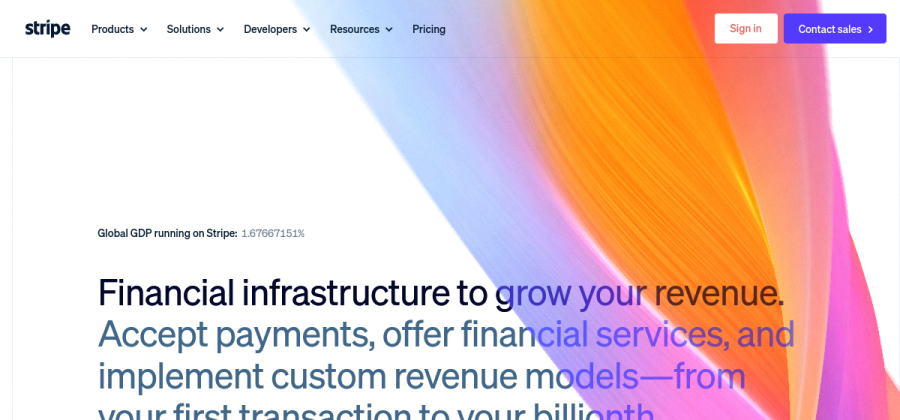

The gold-standard API in SaaS. Clear docs, predictable behavior, huge ecosystem. If you accept online payments, this is the default.
Open stripe.com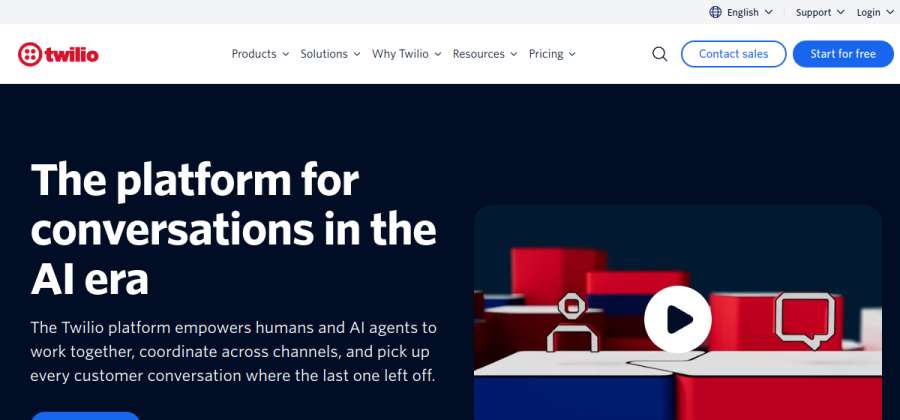

SMS, voice and email via API. Famous for documentation quality and reliability at scale.
Open twilio.com

Well-documented CRM API. The reason HubSpot integrates with almost every adjacent SaaS out of the box.
Open hubspot.com

Spreadsheet meets database meets API. Lets non-engineers build data apps that other tools can read and write.
Open airtable.com

Public API lets Zapier and friends read and write Notion pages. Used for lightweight dashboards and content ops.
Notion API docs

One of the most-integrated APIs in SaaS. Nearly every business tool has a native Slack notification.
Slack API docsWell-known examples — all have mature, public, well-documented APIs. A signal of long-term health.
How to check if a SaaS tool has a good API
You are not a developer, but five minutes of looking is enough to form a judgment.
- Does the vendor have a
/developersor/apipage in its nav? If yes, that is a strong baseline. - Are there public docs you can read without a login? Opaque docs = opaque vendor.
- Is the tool listed on Zapier or Make ? If yes, someone has verified the API is usable.
- Are there customer-built integrations, or only vendor-built? Healthy APIs get used by outsiders.
- Does the vendor rate-limit aggressively or paywall the API at a high tier? This is a lock-in signal.
When you probably do not need to care about APIs
If all of these are true:
- You use fewer than 4 SaaS tools.
- You rarely move data between them.
- You do not plan to grow past 3 users.
Then APIs are a nice-to-have you can ignore. Pick for UX and price. Revisit at year two.
FAQ
Do I need to know how to code to use APIs?
No. Tools like Zapier , Make and n8n wrap APIs in visual builders. You click, drag, test — the API bits happen behind the scenes.
Is an API free?
The API itself is usually free. Most vendors charge based on how often you call it (per-request, per-minute or monthly quota). Most small teams never hit the paid tiers.
Is there a difference between an API and a webhook?
A webhook is a specific kind of API interaction. Think of a webhook as “App B calls you the moment something happens”, while a typical REST API is “you call App B to ask if anything happened.” Webhooks are faster and lighter for real-time flows.
What does “open API” mean?
“Open” usually means public, documented, and not gated behind an enterprise tier. It is a strong positive signal when you are shopping.